Leave a Message

Thank you for your message. I will be in touch with you shortly.

Ski-In/Ski-Out Real Estate In Teton Village

December 18, 2025

Clicking into your skis at your front door sounds like a dream. In Teton Village, that dream is real, but the details matter. Marketing terms often blur the lines between true ski-in/ski-out and ski-adjacent. If you want everyday convenience and strong resale value, you need to verify how access actually works.

This guide breaks down what truly counts as ski-in/ski-out in Teton Village, how different access types function, the HOA and title items to review, and the lifestyle tradeoffs to consider. You will also get a practical checklist and the key questions to ask before you buy. Let’s dive in.

What ski-in/ski-out really means

At its core, ski-in/ski-out means you can begin or end a ski run and reach your property or a lift that accesses the resort without taking off your skis. In practice, listings use this term loosely, so you need to confirm the exact route and whether it is continuous, legal, and realistic in typical winter conditions.

Related terms you will see:

  • Ski-out or ski-down: You can ski from the property to a lift, meeting area, or resort base without removing skis.
  • Ski-in or ski-back: You can ski back from the lift or slope to the property without removing skis.
  • Ski-on or ski-off: Often used interchangeably with ski-in/ski-out, usually implies very direct slope access.
  • Slope-side or lift-adjacent: Close to lifts or runs but may require a short walk, stairs, or a groomed path. This is not continuous ski access if you must take off skis.
  • Near the base or resort-side: Convenient to resort services but may not offer true ski-in/ski-out.

Buyer takeaway: do not rely on marketing labels alone. Verify the physical route, any recorded rights, and how seasonal conditions affect daily use.

How access works in Teton Village

Teton Village sits at the base of Jackson Hole Mountain Resort. The aerial tram, gondolas such as the Bridger Gondola, and high-speed chairlifts create several nodes where true ski access is possible. Properties can tie into those nodes in different ways, each with its own practicality and value.

Direct slope and lift-adjacent access

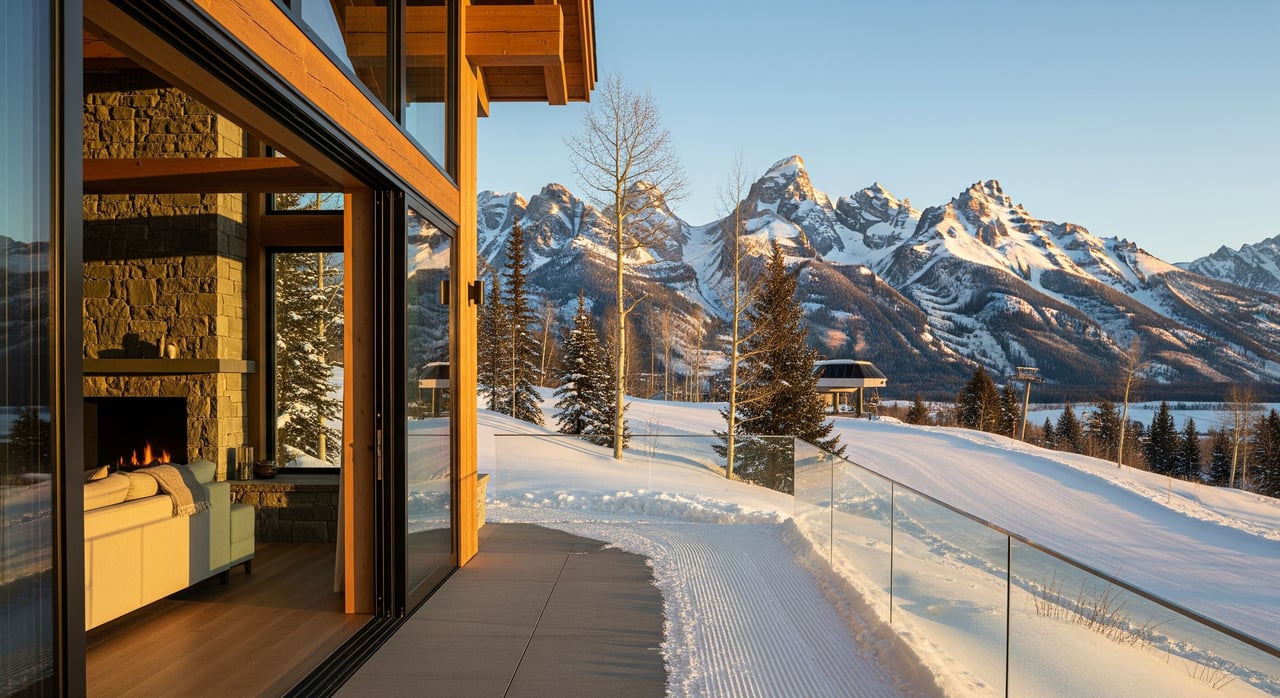
Some condos and townhomes open directly to a groomed run. You step outside, click in, and go. Buildings next to a lift or tram terminal can also offer full access if a groomed connector or ramp lets you ski right to the lift without walking. This is the clearest form of ski-in/ski-out.

Easements and private trails

Luxury homes set slightly off the main runs may have a recorded ski easement or private trail that connects to the resort. When the easement is permanent and clearly documented, it can provide excellent access while preserving privacy. Always confirm who maintains and grooms the trail, and whether there are seasonal limits.

Short walk connections and crossings

Some properties rely on a brief, flat walk, a stairway, or a crossing of a road or pedestrian area to reach a lift. These homes are often marketed as ski-adjacent or ski access. If you must remove skis at any point, it is not continuous ski-in/ski-out. Consider how that feels with children, gear, and changing weather.

Seasonal and grooming realities

Early or late season snow, lift maintenance, and grooming priorities can change whether a route skis well on a given day. A recorded easement does not guarantee skiable snow at all times. Ask how often the connector is groomed, which runs get nightly attention, and how operations change during shoulder seasons.

Legal and HOA checks that matter

Ski-in/ski-out is only as good as the rights and maintenance behind it. You want enforceable access, clear responsibilities, and manageable risk.

Recorded easements and boundaries

The strongest evidence of true access is a recorded, permanent easement or right-of-way that allows skiing between the property and resort terrain. Request a title report that spells out the easement location, width, and conditions. Confirm land ownership along the route, since connectors may cross resort parcels, public lands, or HOA property. If any portion crosses federal or state land, verify if permits or seasonal closures apply.

HOA rules, rentals, and costs

HOA documents can directly impact daily convenience and long-term costs. Review CC&Rs, bylaws, budgets, minutes, and reserve studies for:

  • Snow removal, grooming commitments, and staffing levels.
  • Maintenance of trails, stairs, bridges, lockers, and common areas.
  • Short-term rental rules, guest policies, and any on-site management requirements.
  • Special assessments for slope, retaining wall, or structure repairs.

These items influence both your experience and your bottom line.

Insurance and hazards

Some slope-side areas sit near avalanche-managed terrain. Confirm whether the property lies in a mapped hazard zone and understand the resort’s mitigation program. Clarify liability for any private trail or easement, including who bears risk if an injury occurs on the connector. Ask your insurer about coverage availability and whether premiums are higher for properties close to ski infrastructure or in hazard areas.

County and municipal rules

Short-term rental permits, occupancy taxes, parking rules, and building codes can affect income potential and owner use. Check current standards that apply to Teton Village, and confirm utilities, plowing, and emergency access during heavy snow periods.

Value drivers and lifestyle tradeoffs

True ski-in/ski-out in Teton Village commands a premium because of convenience and scarcity. Still, the best fit depends on your lifestyle, privacy expectations, and rental goals.

Premiums and rental demand

  • Convenience and time savings drive demand for direct slope access.
  • Properties close to gondola or tram terminals are limited in number, which supports per-square-foot pricing.
  • Guests often pay more for genuine ski access, which can lift rental performance. Verify actual figures with management statements, not projections.

Noise, privacy, and parking

  • Base-area homes are lively during lift hours and events. Expect some noise and activity.
  • If you prefer seclusion, a home set back with a private ski easement can balance privacy with access.
  • Parking is often shared or restricted in slope-side communities. Confirm assigned stalls, guest limits, and how winter operations affect vehicle use.

Seasonality, maintenance, and resale

  • Early or late season conditions may limit daily ski-back options, even with an easement.
  • Complex mountain infrastructure can increase HOA dues and special assessment exposure.
  • True ski-in/ski-out locations often show price resilience, but unique easement structures or maintenance obligations can complicate a future sale if buyer priorities change.

Buyer checklist for Teton Village ski access

Use this checklist to verify claims and avoid surprises.

Physical and route checks:

  • Walk the route in winter and ski it if possible. Confirm you can reach a lift and return without removing skis.
  • Compare parcel maps with the resort trail map and lift terminals.
  • Obtain a title report and confirm any recorded ski easements or rights-of-way.
  • Review or order a survey to confirm boundaries and proximity to grooming corridors.

HOA and governance checks:

  • Request the full HOA packet: CC&Rs, bylaws, minutes for the last 12 months, budget, reserve study, and insurance declarations.
  • Identify who maintains the connector route and what triggers grooming or snow removal.
  • Confirm whether rentals are allowed, whether a specific manager is required, and any owner-use restrictions.

Risk and cost checks:

  • Ask about avalanche mitigation and whether the property sits in any mapped hazard areas.
  • Confirm insurance availability and premiums for slope-adjacent homes.
  • Ask about planned or potential special assessments tied to trails, stairs, bridges, or retaining walls.

Operational and usage checks:

  • Verify owner and guest parking locations, stall assignments, and seasonal limits.
  • Confirm the availability and cost of ski lockers, storage, and valet services.
  • Ask about lift maintenance windows or seasonal closures that could affect daily access.

Market and value checks:

  • Compare recent sales of direct ski-in/ski-out units with ski-adjacent options to understand the premium.
  • If income matters, request actual rental statements and compare to municipal occupancy data where available.

Smart questions to ask your advisor

  • Is the property truly ski-in/ski-out all season, or only during peak coverage?
  • If the connector trail is not groomed, who is responsible and how quickly is it addressed?
  • Does proximity to the tram or a gondola support stronger resale compared with chairlift-only access?
  • Do I need special insurance or disclosures because of avalanche exposure or private easements?
  • How do HOA rules about rentals and on-site management affect my income and owner use?

Ready to explore on snow?

If you want a property where your morning commute is a glide to the gondola, local, on-the-ground verification is essential. You deserve clear answers on easements, grooming, insurance, and HOA obligations before you write an offer. A thoughtful plan will save you time and protect long-term value.

For tailored guidance, winter walkthroughs, and deal-savvy support, connect with Sherry Messina. You will get boutique-level service with deep local insight on Teton Village, land and lifestyle-driven options, and sophisticated transaction expertise. Schedule Your Jackson Hole Consultation.
FAQs

What does ski-in/ski-out mean in Teton Village?

  • It means you can begin or end a ski run and reach your property or a lift without removing skis, verified by a continuous, practical route in typical winter conditions.

How do I confirm a ski easement is valid?

  • Request a title report that shows a recorded, permanent easement with clear location, width, conditions, and maintenance responsibilities.

Are lift-adjacent condos always true ski access?

  • Not always; proximity helps, but if you must walk stairs, cross roads, or remove skis, it is ski-adjacent, not continuous ski-in/ski-out.

What HOA items most affect ski access costs?

  • Snow removal and grooming obligations, common area maintenance, staffing levels, insurance, and any special assessments tied to trails or structures.

Do avalanche zones change insurance needs for slope-side homes?

  • They can; confirm if the property lies in a mapped hazard area and ask your insurer about coverage availability and potential premium impacts.

Will tram or gondola proximity boost resale value?

  • It often supports demand due to convenience and scarcity, but verify recent sales and buyer preferences at the time you list.

Work With Sherry

Trust her to guide you through Jackson Hole’s luxury real estate with expert insight, bold negotiation, and unmatched dedication. With her at your side, your buying or selling journey becomes strategic, seamless, and rewarding.