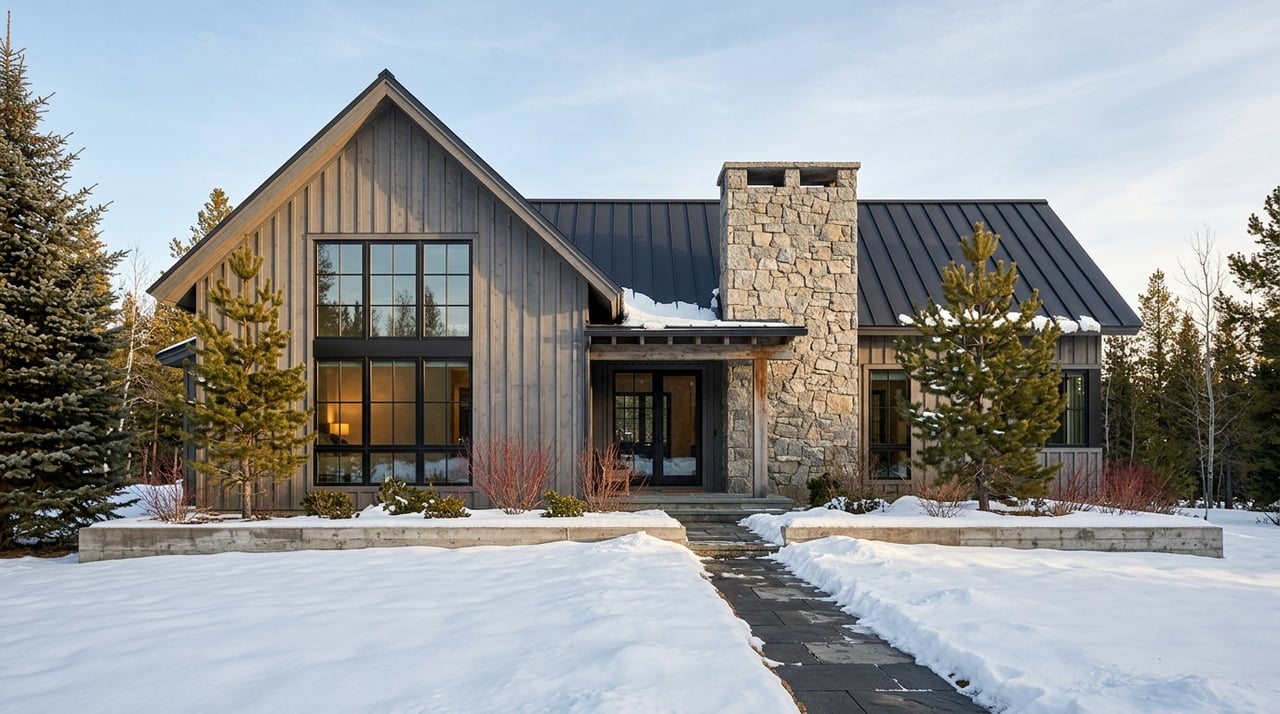
Choosing Between Wilson, Jackson and Teton Village
April 23, 2026
April 23, 2026
Trying to choose between Jackson, Wilson, and Teton Village? In a valley this small, those three addresses can seem close enough to feel interchangeable, but they offer very different day-to-day experiences. If you are buying a primary home, second home, or mountain getaway in Teton County, understanding those differences can help you narrow your search faster and buy with more confidence. Let’s dive in.
Even though Jackson, Wilson, and Teton Village sit within the same valley, they serve different roles. Jackson is the county’s only incorporated municipality, while county planning frames Jackson as the region’s retail, civic, housing, and cultural hub. Wilson and Teton Village are smaller west-bank communities with their own distinct identities.
The valley is connected in practical ways. A regional pathway network links Jackson, Wilson, Teton Village, and Grand Teton National Park, and transit options connect Jackson with Teton Village. That means you are not choosing total isolation versus total access. You are choosing which type of lifestyle you want to put at the center of your everyday routine.
If you want the broadest mix of housing, the most everyday convenience, and a true town center, Jackson usually stands out first. The county describes Jackson as the population center and the primary location for jobs, shopping, education, and cultural activity.
That role shapes the housing landscape too. The same planning guidance says Jackson has the greatest diversity of housing in the county, including single-family homes, duplexes, condos, carriage homes, lofts, apartments, and deed-restricted housing. If you want more product variety in one market, Jackson gives you the widest menu.
For many buyers, Jackson makes the most sense as a year-round base. You are closer to daily errands, community services, and the civic core of the valley. If your goal is to live in the middle of the region’s activity instead of at the edge of it, Jackson is often the most practical fit.
There is a trade-off, of course. Because Jackson is the valley’s main hub, it tends to feel more active, more commercial, and less tucked away than Wilson or Teton Village. Housing costs are also significant, with the U.S. Census QuickFacts for Jackson reporting a median owner-occupied value of $1,228,700 and median gross rent of $1,975 for 2019 through 2023.
Jackson may be the right match if you want:
Wilson often appeals to buyers who want a west-bank address with a more residential feel. Located west of Jackson at the base of Teton Pass on WY-22, Wilson is treated by the county as a node that already includes education, convenience commercial, sewer, emergency services, recreation, and transit.
What makes Wilson especially distinct is its planning framework. County guidance for Wilson supports a neighborhood-scale pattern, with town-style development, generally 50-by-150 lots, one or two dwelling units, and detached or duplex character with pedestrian access. In plain terms, Wilson is meant to stay local, residential, and community-oriented.
That same guidance also makes clear that Wilson’s commercial core is intended to remain locally focused. Mixed-use redevelopment may be encouraged, but the county says lodging is not appropriate in the core, and Wilson should not absorb added resort, retail, or civic land uses. That helps preserve the sense that Wilson is a real community center rather than an extension of a resort district.
Wilson can feel like the middle path in this comparison. It sits between Jackson’s full-service convenience and Teton Village’s resort energy. If you want access to Jackson Hole but prefer something more residential than Jackson and less visitor-driven than Teton Village, Wilson often checks that box.
Wilson is not simply a quieter version of Jackson. It has its own practical considerations. Recent county and transportation planning documents note traffic, speed, and pedestrian-crossing concerns along WY-22 through Wilson, including limited pedestrian facilities in parts of the corridor.
For some buyers, that is a meaningful part of the decision. If you love the neighborhood feel but plan to rely heavily on walkability in every direction, it is worth understanding how the corridor functions today.
Wilson may be the right match if you want:
For buyers looking at year-round living, Wilson is also part of Teton County School District #1, and Wilson Elementary is one of the district’s elementary schools.
If your first priority is skiing and direct resort access, Teton Village usually leads the conversation. Located about 12 miles northwest of Jackson at the foot of the Tetons, Teton Village borders Grand Teton National Park and is identified by the county as one of the most intensive development districts in Teton County.
Its purpose is different from Jackson or Wilson. County planning for Teton Village emphasizes approved resort uses and higher-end visitor services, while limiting most additional development outside restricted workforce housing and limited local commercial. This is a resort-centered environment by design.
That orientation is reinforced by Jackson Hole Mountain Resort’s own description of Teton Village as the mountain base, with slopeside lodging, homes, condos, and ski-in/ski-out stays. If you picture stepping into a mountain-focused lifestyle with resort services close at hand, Teton Village is built around that experience.
The area also has established infrastructure, including sewer, emergency services, recreation, transit, and a medical clinic. Planning documents also highlight year-round transit frequency and more alternate-mode trips on Highway 390, which matters if you want a resort location that stays connected to the wider valley.
The same features that make Teton Village attractive can also limit its appeal for some buyers. It is the most resort-driven and least town-like of the three markets. If you want a broad mix of day-to-day civic, retail, and cultural functions, Jackson offers more of that experience.
Teton Village tends to make the most sense for buyers who are comfortable in a more seasonal, visitor-oriented setting. For frequent visitors, second-home owners, and buyers who prioritize lock-and-leave convenience near the mountain, that can be exactly the point.
Teton Village may be the right match if you want:
Here is a simple way to frame the choice:
| Area | Best Known For | Best Fit For | Main Trade-Off |
|---|---|---|---|
| Jackson | Full-service town living | Buyers who want convenience, variety, and a year-round base | More activity, density, and commercial energy |
| Wilson | Neighborhood-scale west-bank living | Buyers who want a residential feel and local identity | Less central than Jackson, corridor traffic along WY-22 |
| Teton Village | Resort and mountain access | Ski-first buyers, second-home owners, frequent visitors | Least town-like, more seasonal and resort-driven |
The best choice usually comes down to what you want your day-to-day life to feel like. If you want the valley’s strongest mix of housing and services, Jackson is often the clearest answer. If you want a local residential setting that sits between town and resort life, Wilson may offer the balance you are after. If mountain access leads your list, Teton Village is hard to beat.
It also helps to think beyond the home itself. Your ideal fit may depend on whether you are buying for full-time living, seasonal use, ski access, future building plans, or a longer-term lifestyle investment. That is where local guidance can make the process much clearer.
If you are comparing neighborhoods, resort properties, or land opportunities in Jackson Hole, Sherry Messina can help you evaluate which setting best matches your goals and the lifestyle you want to create.
Trust her to guide you through Jackson Hole’s luxury real estate with expert insight, bold negotiation, and unmatched dedication. With her at your side, your buying or selling journey becomes strategic, seamless, and rewarding.