What to Know About Buying Land in Wilson, WY
April 16, 2026
April 16, 2026
If you are thinking about buying land in Wilson, Wyoming, it helps to know one thing right away: not all acreage is equally buildable. A parcel may look ideal on paper, but slope limits, wetlands, overlays, access, utilities, and private restrictions can all shape what you can actually do with it. If you want to buy with confidence, understanding those moving parts early can save you time, money, and frustration. Let’s dive in.
Wilson is not the same kind of market as in-town Jackson. Teton County’s planning framework treats Wilson as a county node with an emphasis on housing and town-level densities near its commercial core, while Jackson remains the region’s primary center for lodging, retail, professional services, and civic uses, according to the Wilson district planning materials.
For you as a land buyer, that distinction matters. In Wilson, land value is often tied more closely to regulatory feasibility, neighborhood compatibility, and usable build area than to simple assumptions about future subdivision or redevelopment potential. The county also notes that redevelopment in Wilson is generally expected to happen incrementally and in a pattern that fits existing development.
That can be especially important if you are searching for a homesite, a second-home retreat, or a parcel for a custom build. In many cases, the real question is not just how many acres you are buying, but how much of those acres can be practically and legally improved.
When you buy land in Wilson, buildability should be your first lens. Before you focus on views, privacy, or design ideas, it is smart to confirm what the county and any private restrictions will allow.
Teton County now requires a Natural Resource Assessment process before any physical development permit or new use. The county GIS mapping tools are the starting point for identifying the applicable Natural Resources Overlay tier, and the review path varies based on the parcel and project.
Some lots may qualify for a simpler Base Tier Desktop Checklist, especially existing platted subdivisions with approved building envelopes or lots of 2 acres or less. Other properties may require a Mid-Tier Zoning Compliance Verification or a High-Tier Environmental Analysis that starts with a pre-application conference. That difference can have a major impact on your timeline and planning costs.
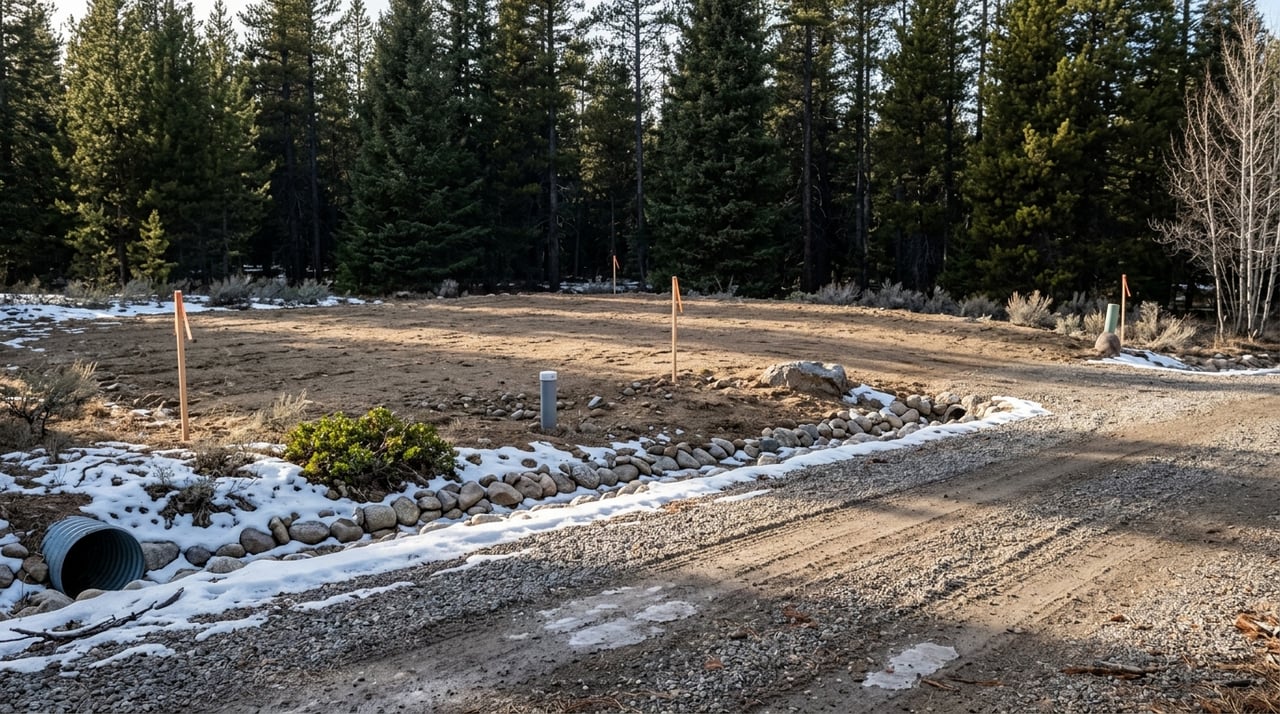
A large parcel does not always mean a large building area. Teton County states that no physical development is permitted on natural slopes greater than 30%, and local standards also require buffers from water features.
Under current county standards, setbacks include 150 feet from rivers, 100 feet from perennial and intermittent streams, 30 feet from ephemeral streams, and 50 feet from wetlands, as outlined in the county amendment materials. If a parcel includes steep topography, wetlands, or stream corridors, the likely building envelope may be much smaller than the total acreage suggests.
A parcel can be technically buildable and still come with important design constraints. Teton County’s land development regulations explain that the Scenic Resource Overlay can affect exterior colors, lighting, and other scenic-facing design choices.
That means your architecture, site placement, and lighting plan may need to be more intentional than you first expect. For buyers planning a custom home, those standards are not necessarily a problem, but they are part of the diligence process and should be reviewed early.
In Wilson, a recorded conservation easement can be just as important as zoning. Teton County notes that land subject to a conservation easement may qualify for a Natural Resource Assessment exemption in some situations, but only if the easement documentation and prior review are sufficient for the Planning Director’s decision, as explained in the county’s development FAQ.
In practical terms, that means you should review the actual easement documents, not just the listing remarks. An easement may limit building areas, land use, or future improvements in ways that are not obvious from acreage alone.
For many land buyers, utilities and access are the biggest diligence items after buildability. Two parcels with similar size and location can have very different costs and timelines depending on water, sewer, septic, and road access.
Service in Teton County is not one-size-fits-all. According to the county’s existing conditions snapshot, some areas near Wilson are served by specific water and sewer districts, while other properties may rely on different district structures or private systems.
For example, Wilson Meadows is in the Aspen/Pines sewer district and has its own water district, while Aspen Pines and Teton Village have their own districts for both water and sewer. Because service can vary by subdivision and parcel, you will want to confirm utility status directly rather than assume availability.
If a property relies on a private well or spring, Teton County recommends testing private water systems once or twice a year, especially during high-water season and before a real estate transaction, according to the county’s drinking water guidance.
If a parcel is not connected to public sewer, septic review becomes a separate and important step. Teton County manages small wastewater actions through its small wastewater facility permit portal, which is a useful reminder that septic design, capacity, and permitting should be reviewed early in your contract period.
This is one of the biggest reasons land purchases need more diligence than an existing home. You are not only buying the site itself. You are also evaluating whether the site can support the infrastructure your plans require.
Access is not automatic on acreage. If you need to construct a driveway from a county road, Teton County requires a county road access permit, and that permit is tied to the county building permit.
For buyers, this means legal access, driveway location, and drainage planning should all be reviewed before closing. If a parcel is served by a private road or easement, that should be evaluated just as carefully.
Every private land parcel in Teton County falls inside the mapped Wildland Urban Interface. The county states in its FAQ page that WUI review must be submitted through SmartGov before permit take-in.
That has practical implications for site planning and construction. The county also notes that bear-resistant trash requirements and wildlife-friendly fencing standards are part of local compliance, so these items should be part of your planning conversation from the beginning.
For buyers building a custom home, this is another reason to take a full-picture approach. The permit path is not just about a house plan. It is about how the property, improvements, and local standards all fit together.
One of the most common mistakes land buyers make is assuming a quick path from closing to construction. In Wilson, that is rarely the case.
Teton County requires building applications to be submitted through its online building portal, and new residential construction still requires a scheduled submission week with the permit technician. Review times depend on the project, but a new home typically moves through planning, overlay review, access review, wastewater review, and fire review before construction can begin.
The county also notes that new residential projects can trigger multiple costs beyond the land price, including plan review fees, grading and erosion-control fees, small wastewater or septic fees, sewer connection fees, and housing or energy mitigation charges, according to its building permit fee resources.
In other words, it is wise to underwrite a Wilson land purchase with both time and soft costs in mind. A raw acreage parcel may offer exceptional long-term value, but it often requires a patient and well-organized approach.
When you are planning a build, regional access matters too. The National Park Service notes that Moose-Wilson Road closes seasonally from November 1 through mid-May between Moose and the Granite Canyon Entrance Station.
The research also notes that Teton Pass has experienced closures and detours tied to landslide and road-damage events. For you, that may affect travel patterns, construction scheduling, vendor access, or seasonal planning, depending on where your parcel is located and how you expect to use it.
Before you move forward on a parcel, these are some of the most important questions to answer:
Buying land in Wilson can be incredibly rewarding, but it is rarely simple. The right parcel can offer privacy, mountain character, and a strong long-term lifestyle fit, yet the path from raw land to finished home depends on details that are easy to miss if you only look at acreage and price.
That is where local market knowledge matters. When you understand how to evaluate buildability, utility service, access, overlays, and timing before you commit, you can make a much more informed decision.
If you are considering land or acreage in Wilson, working with an advisor who understands Jackson Hole land transactions can help you ask better questions early. To talk through available opportunities and the diligence process, connect with Sherry Messina.
Trust her to guide you through Jackson Hole’s luxury real estate with expert insight, bold negotiation, and unmatched dedication. With her at your side, your buying or selling journey becomes strategic, seamless, and rewarding.